Commercial Roof Maintenance Checklist for Florida’s Rainy Season in Nocatee, FL
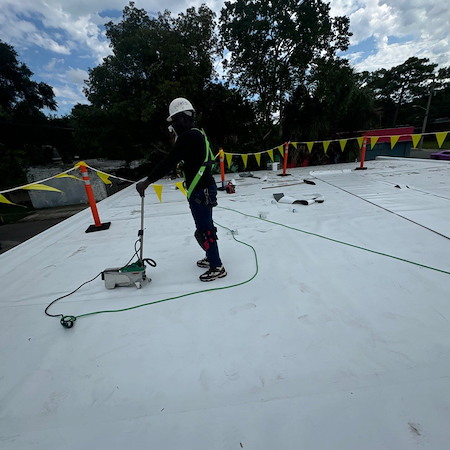
Florida’s summer storms put every commercial roof to the test. Use this commercial roof maintenance checklist to prep buildings in Nocatee, FL before daily downpours arrive. If you manage a plaza near Nocatee Town Center or an office along CR-210, a professional plan matters. See how our commercial roof maintenance visits keep water moving, details tight, and operations steady.
What Florida’s Rainy Season Means for Nocatee Buildings
In Northeast Florida, the wettest stretch typically runs from late May through September, with pop-up storms that dump inches of rain in minutes. That means roofs need clear drainage, tight seams, and protected edges so water does not linger on the surface or creep into the building. Properties in Crosswater, Twenty Mile, and Coastal Oaks often see strong sun between storms too, which accelerates wear on membranes and flashing.
Your goal is simple: shorten the time water spends on the roof and remove weak points that wind-driven rain can find. The checklist below explains what a trained crew inspects and documents during each maintenance visit.
Your Commercial Roof Maintenance Checklist
1) Drainage That Moves Water Off Fast
Flat and low-slope roofs are designed with subtle slope, internal drains, scuppers, and downspouts. During a maintenance visit, technicians verify that strainers are secure, scuppers are unobstructed, and overflow paths are open. They also evaluate low areas around rooftop units where water lingers after storms. If ponding is persistent near parapet corners, your pro may recommend adding crickets or adjusting taper during a future project.
2) Seams, Flashings, and Penetrations
Most leaks start at details. Pros check membrane seams, T-joints, edge metal, pitch pans, and flashing at HVAC curbs and pipe boots. Probe testing and targeted repairs at early stress points prevent splits from widening when afternoon heat returns. For single-ply systems, weld quality and termination bars get special attention.
3) Rooftop Equipment and Traffic Paths
Service routes to air handlers and vents see the most foot traffic. Your maintenance crew confirms walkway pads are placed where people actually walk and notes any scuffs or punctures near equipment. They also look for loose panels, unsecured conduits, or vibration that can damage nearby flashing.
4) Edges, Parapets, and Perimeters
Wind uplift concentrates at corners and edges. Technicians check coping, counterflashing, and fasteners, then reseal or tighten as needed. They document any gaps where wind-driven rain can push water beneath the membrane during squalls.
5) Membrane Surface and Reflectivity
In our climate, heat and UV can age materials quickly. Your crew evaluates surface wear, chalking on sunny exposures, and algae or dirt films that trap heat. Professional cleaning helps restore reflectivity on white membranes and reduces thermal stress between storms.
6) Gutters, Downspouts, and Discharge Points
For buildings with perimeter drainage, pros clean gutters, confirm downspouts are clear, and make sure splash blocks or leaders do not erode landscaping or backflow against the structure. They also check for staining that signals overflow during typical showers.
7) Documentation and Warranty Support
Every visit should include photos, notes, and a clear list of repairs completed and recommended. Detailed records help you track trends, plan work during quieter business hours, and support manufacturer warranty requirements.
- Clear drains before the first long summer storm so water cannot back up at strainers or scuppers.
- Document every visit with photos and reports to protect warranties and speed decisions after severe weather.
Timing Your Preventative Maintenance Schedule in Northeast Florida
A twice-a-year rhythm works well here: one service visit in late spring before daily storms, another in early fall after the peak. Many property managers also schedule a quick mid-summer check on high-priority facilities with heavy foot traffic on the roof or complex drainage. Schedule professional inspections twice a year in Florida: late spring and early fall. That cadence helps catch issues early and reduces disruption for tenants.
Seasonal patterns matter in Nocatee. Early summer brings intense rain and heat, so crews prioritize drainage and detail checks around curbs and penetrations. Later in the season, the focus shifts to documenting wear, verifying edge securement after windy systems, and planning any larger repairs for drier weeks. For helpful background reading on roof systems and storm behavior in our area, browse our latest roofing tips.
What a Professional Maintenance Visit Typically Includes
While each roof is unique, a typical service appointment in Nocatee includes a structured inspection, minor corrective work, and a written report with photos. Your contractor will tailor the scope to system type, age, and how the building is used.
- Inspection of seams, flashings, penetrations, and perimeters with targeted tune-ups
- Drain, scupper, and gutter cleaning to remove leaves, twigs, and sediment
- Surface cleaning on reflective membranes to restore performance
- Probe testing or sealant touch-ups at early stress points
- Walkway pad review and adjustments along actual service routes
- Photo documentation and a prioritized plan for next steps
If the inspection reveals recurring leaks or trapped moisture, your contractor may recommend moisture mapping or core sampling to guide decisions on repair, recovery, or replacement. You can learn how we structure this service on our page for ongoing commercial roof maintenance.
Local Watchouts Around Nocatee and Ponte Vedra
Facilities near preserved greenways tend to collect more organic debris that clogs strainers. Retail centers along Valley Ridge Boulevard often see heavy rooftop foot traffic from frequent HVAC service. Buildings closer to US-1 or I-295 can accumulate soot and dust that dull reflective membranes. These patterns are normal for our area, which is why your plan should combine cleaning, detail checks, and documentation tailored to each property.
For broader system education, material comparisons, and rainy-season planning ideas, our article archive is a useful resource. You can also head to our homepage for guidance on commercial roof maintenance in Nocatee, FL and a look at the full range of services from Weatherlock Roof Systems LLC.
When Small Issues Become Big Disruptions
A loose edge or a slow drain can become interior stains, tenant complaints, or damaged stock after a single storm line. Early action keeps problems small and predictable. If an inspection flags active water entry, coordinate a repair window quickly so business hours are not affected. For recurring leaks or storm damage, learn how we handle precise roof repairs that stabilize the system and protect your schedule.
How Property Managers Use This Checklist
Managers across Crosswater, Twenty Mile, and Town Center use this checklist to set expectations with their roofing partner and to plan building access with tenants. Keep a simple roof log with dates, photos, and recommendations. Review it each season so budgets match real conditions and repairs are grouped into efficient site visits. Never allow untrained staff on the roof. It is safer and it protects the membrane from accidental damage that leads to leaks.
Partner With a Local Team That Knows Nocatee
Weatherlock Roof Systems LLC builds maintenance plans around Florida weather and the realities of occupied buildings. We schedule during off-peak hours when possible and provide photo reports that make decisions easier for owners and asset managers. To map the right plan for your properties in Nocatee, call us at 904-204-4650. If you want a head start before the next storm cycle, review what is included in our commercial maintenance program and get on the calendar.
Ready Before the Next Storm Cloud Forms
Florida’s rainy season rewards the prepared. A focused checklist, documented visits, and fast follow-through protect interiors, tenants, and your reputation. Connect with Weatherlock Roof Systems LLC at 904-204-4650 to schedule a maintenance plan that fits your buildings in Nocatee and throughout St. Johns County.


Contact Your Local Commercial Roofing Company Today